The soil profile near the Goulburn River floodplain is markedly different from the clay flats around the Shepparton Golf Course. Along the river, sandy loams and silty layers dominate, while the eastern suburbs sit on deep, reactive clays that swell and shrink with seasonal moisture changes. A proper geotechnical drainage design must account for these contrasts; what works in the sandy zone may fail in the clay. Before finalising any drainage scheme, we often recommend a permeability field test to measure actual infiltration rates on site, and a geotechnical instrumentation plan to monitor pore pressure changes over time.
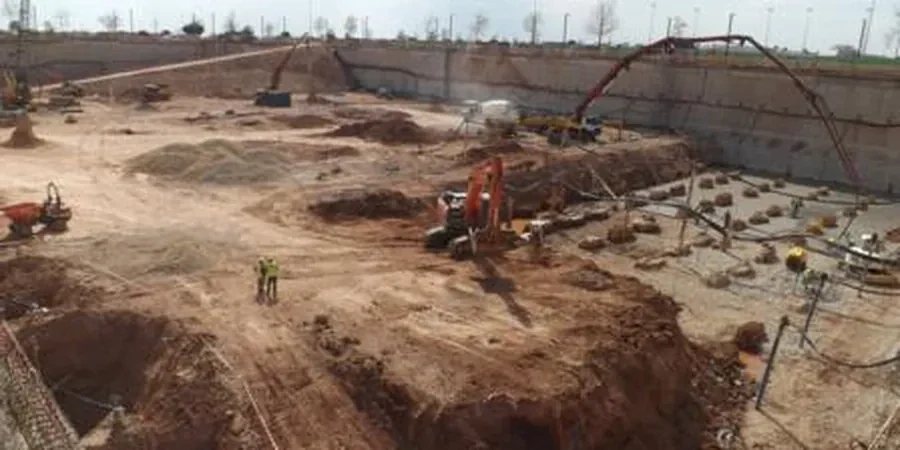
In Shepparton, a properly designed drainage system can reduce lateral earth pressures on retaining walls by up to 40 percent.
Method and coverage
- Slotted PVC pipes wrapped in geotextile to prevent clogging
- Granular filter layers designed to AS 4678 particle size criteria
- Discharge outlets positioned above the 1-in-100 year flood level
Regional considerations
Shepparton expanded rapidly from the 1960s as irrigation agriculture boomed, pushing developments onto former floodplain and swamp margins. These areas often contain soft, compressible clays with perched water tables. Without adequate geotechnical drainage design, water accumulates behind retaining walls, saturates foundation soils, and triggers heave or slope instability. Several commercial sites near the Goulburn Valley Highway have experienced pavement cracking and wall tilting because surface water was directed into the backfill without a proper filter layer. The lesson is clear: drainage is not an afterthought, it is a core part of the geotechnical solution.
Standards that apply
AS 4678:2002 Earth-Retaining Structures, AS 1726:2017 Geotechnical Site Investigations, AS/NZS 1170.2:2011 Structural Design Actions – Wind Actions
Other technical services
Subsurface Drainage Design for Retaining Walls
Design of weep holes, horizontal drains, and chimney drains behind cantilever or gravity walls. Includes filter compatibility analysis and discharge routing to avoid erosion. We calculate flow rates using Darcy's law and modify spacing based on in-situ permeability data.
Foundation Drainage and Water Table Control
Perimeter drain systems, sump and pump layouts, and trench drains for slab-on-ground and deep foundations. We account for seasonal water table rise and design for a 1.5 factor of safety against hydrostatic uplift.
Typical parameters
Top questions
What is the typical cost for a geotechnical drainage design report in Shepparton?
A site-specific drainage design report including field permeability testing and AS 4678 calculations typically ranges between AU$1.300 and AU$4.040. The final figure depends on site area, number of retaining walls, and required testing depth.
When do I need a geotechnical drainage design instead of a standard plumber's drainage plan?
A plumber's plan handles surface water and roof runoff. A geotechnical drainage design addresses subsurface water: groundwater seepage, pore pressure behind walls, and soil saturation. You need it when you are building retaining walls over 1 m high, excavating below the water table, or constructing on reactive clay soils common in Shepparton.
How long does the drainage design process take?
From site investigation to final report, expect 2 to 4 weeks. The field testing (permeability, water table monitoring) takes 2 to 5 days, followed by analysis and drafting. We can expedite to 10 days for urgent projects.