Shepparton sits on the Goulburn River floodplain, where clay-rich soils and shallow water tables create constant challenges for fill stability. The area's seasonal flooding means any road embankment design must account for rapid saturation and potential softening of the foundation layer. In our experience, the key is to characterize the in-situ moisture content and plasticity before placing any fill. We start with a detailed site investigation to map soil variability across the alignment, and often combine this with a density test using the sand cone method to verify compaction targets during early lifts. This approach avoids the differential settlement issues we frequently see in poorly compacted fills across the region.
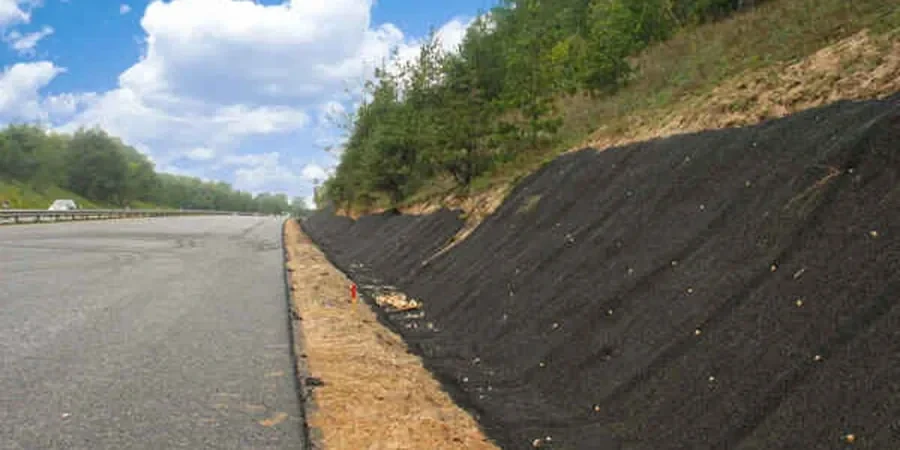
The alluvial clays here vary in plasticity from low to high within a single kilometre of road — treat them as uniform at your own risk.
Method and coverage
Regional considerations
The Goulburn River floodplain is underlain by Quaternary alluvial deposits, typically silty clays and clayey silts with plasticity indices ranging from 15 to 45. These soils are prone to volume change with moisture variation, and the shallow water table — often within 1.5 m of the surface after wet seasons — can quickly saturate a fill if drainage isn't properly designed. In Shepparton, ignoring the risk of internal erosion or piping through the embankment core is a common oversight. We always incorporate a drainage blanket and toe drains to control pore pressures, and we check for potential liquefaction of loose granular lenses using the simplified procedure from Youd-Idriss (2001).
Standards that apply
AS 4678:2002 — Earth Retaining Structures, AS 1726:2017 — Geotechnical Site Investigations, AS/NZS 1170.0:2002 — Structural Design Actions (general principles), Austroads Guide to Pavement Technology, Part 4D (2019)
Other technical services
Site Investigation & Soil Classification
We drill boreholes, extract undisturbed samples, and classify soils per AS 1726. Our reports include Atterberg limits, natural moisture content, and particle size distribution to guide fill selection.
Compaction Control & CBR Testing
We perform modified Proctor tests and in-situ density checks using the sand cone or nuclear gauge. Soaked CBR values are measured to confirm the subgrade meets design requirements.
Stability Analysis & Drainage Design
Using limit equilibrium methods (Bishop simplified, Spencer), we evaluate global stability under static and seismic loads. We also design drainage blankets, toe drains, and filter layers to control pore pressure buildup.
Typical parameters
Top questions
What is the typical cost of a road embankment design study in Shepparton?
For a standard road embankment design study including site investigation, laboratory testing, and stability analysis, the cost typically ranges between AU$1,830 and AU$6,300. The final price depends on the length of the alignment, number of boreholes, and complexity of the soil conditions.
How deep should I excavate for a road embankment foundation in Shepparton?
Foundation depth depends on the soil profile. In Shepparton's alluvial clays, we typically excavate 300 to 600 mm to remove topsoil and any organic matter. If soft clay is present at shallow depth, we may recommend over-excavation and replacement with engineered fill or a geotextile separation layer.
What compaction standard applies to road embankments in Australia?
The standard reference is the modified Proctor test (AS 1289.5.2.1). For road embankments, we target at least 95% of maximum dry density within a moisture content tolerance of ±2% of optimum. For high-traffic roads or heavy haul routes, 98% is often specified.
Can I build a road embankment on the Goulburn River floodplain without drainage?
No. Without proper drainage, the embankment will saturate during wet seasons, pore pressures will rise, and the factor of safety can drop below 1.0. A drainage blanket of coarse sand or gravel, plus toe drains, is essential to keep the fill dry and stable.
What is the difference between a road embankment and a fill for a building platform?
A road embankment is a long, linear fill designed to support traffic loads with controlled settlement, often with side slopes at 1.5:1 or 2:1. A building platform is a wide, shallow fill that must limit total and differential settlement to within a few millimetres under static loads. The compaction and testing requirements differ accordingly.