With an average annual rainfall of around 450 mm and expansive soils derived from ancient floodplains, Shepparton presents a distinct set of challenges for slope stability. The Goulburn River and its irrigation channels carve through silty clays and sandy loams that lose strength quickly when saturated. In our experience, a slope stabilization design in Shepparton must account for these moisture-sensitive layers before any cut or fill is approved. That is why we always pair the analysis with a detailed study of soil classification to identify clay plasticity, and with field permeability testing to understand infiltration rates along the slope face. Getting these parameters right early prevents costly rework later.
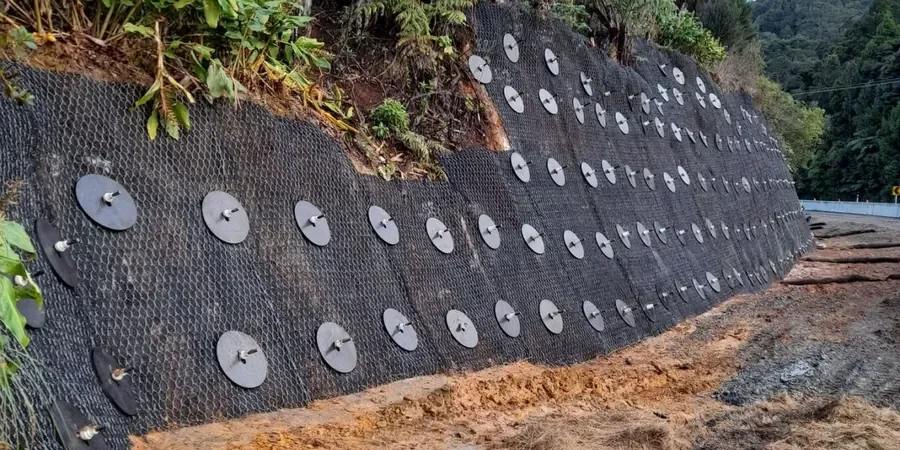
Shepparton's moisture-sensitive silty clays require custom slope analysis — generic designs fail when irrigation or heavy rain hits.
Method and coverage
- Factor of safety calculations for static and seismic loading (AS 1170.4)
- Slip surface analysis using Bishop and Spencer methods
- Drainage recommendations to control pore pressure buildup
- Reinforcement options such as geogrids, soil nails, or vegetated covers
Regional considerations
The biggest risk we see in Shepparton is undetected seepage in the upper soil layers. When irrigation water infiltrates through cracking clays, pore pressure rises quickly and triggers shallow planar slides. Our field crew uses inclinometers and standpipes to monitor movement and water levels during and after construction. A slope stabilization design in Shepparton that ignores this behavior can lead to failures within months. We also watch for piping erosion in dispersive soils — a common issue along channel banks. The combination of slow drainage and high plasticity means that even modest cuts need engineered support to remain safe over the long term.
Standards that apply
AS 4678:2002 – Earth-retaining structures, AS/NZS 1170.4:2002 – Structural design actions (seismic), AS 1726:2017 – Geotechnical site investigations
Other technical services
Slope Stability Analysis & Modeling
Using limit-equilibrium and finite-element software to calculate factors of safety under static, seismic, and transient seepage conditions. We model multiple slip surfaces to identify the critical failure mode for each slope.
Drainage & Erosion Control Design
Surface and subsurface drainage solutions tailored to Shepparton's clay soils. Includes horizontal drains, toe berms, lined channels, and erosion-matting specifications to reduce pore pressure and surface runoff damage.
Reinforcement & Retaining Solutions
Design of mechanically stabilized earth (MSE) walls, soil nail walls, and vegetated slopes using geosynthetics. We select materials compatible with local soil chemistry to avoid long-term degradation.
Typical parameters
Top questions
What is the typical factor of safety required for slope stabilization design in Shepparton?
We generally target a minimum factor of safety of 1.5 for long-term static conditions and 1.3 for short-term or construction scenarios. For seismic loading, AS/NZS 1170.4 requires a reduced factor depending on the site hazard zone, which for Shepparton is moderate.
How much does a slope stabilization design in Shepparton cost?
The cost typically ranges between AU$2,400 and AU$10,270 depending on slope size, complexity of soil conditions, depth of investigation required, and number of design iterations. A preliminary site visit and desktop study can narrow the estimate quickly.
What makes Shepparton's soils different for slope design compared to other regions?
Shepparton's soils are mostly alluvial silty clays and sandy loams with high plasticity and dispersive tendencies. They lose strength rapidly when wet, especially after irrigation or heavy rain. The flat topography also means drainage gradients are low, so pore pressure builds up easily. Designs must account for these moisture-sensitive behaviors.