Seismic site assessment in Shepparton addresses the critical need to evaluate how local ground conditions influence earthquake shaking, forming an essential component of geotechnical engineering for projects across the Goulburn Valley region. While Australia is often perceived as a low-seismicity continent, the 2021 Victorian earthquake near Woods Point served as a stark reminder that intraplate seismicity can produce damaging ground motions, and Shepparton's position within the Murray Basin means that local soil profiles can significantly amplify seismic waves. Understanding seismic hazards through comprehensive investigation is not merely an academic exercise but a practical necessity for protecting life, infrastructure, and investment in this growing regional centre.
The geological setting of Shepparton presents unique challenges for seismic design, characterised by deep Quaternary alluvial deposits of the Shepparton Formation overlying Tertiary sediments and Palaeozoic basement rocks. These unconsolidated silts, clays, sands, and gravels, deposited by ancestral river systems including the Goulburn River, can exhibit strong impedance contrasts with underlying strata, creating conditions conducive to seismic wave amplification and in some cases liquefaction. The variable thickness of these sediments across the municipality, combined with a relatively shallow water table in many areas, means that a one-size-fits-all approach to seismic design is inappropriate, and site-specific investigations become paramount for accurately characterising the dynamic behaviour of the ground.
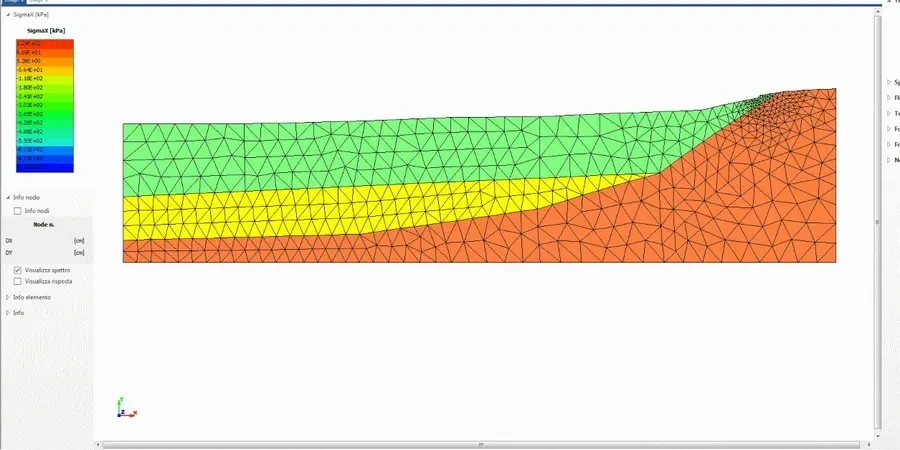
Australian practice for seismic design is governed by AS 1170.4-2007 (Structural design actions – Earthquake actions in Australia), which references the national seismic hazard map and defines spectral shape factors based on site sub-soil classifications ranging from Class A (strong rock) to Class E (very soft soil). For Shepparton projects, the default site classification under this standard often falls into Class C or D, but where deeper soil profiles exist, a detailed site response analysis may be required to justify a more favourable classification or to develop a site-specific design spectrum. The National Construction Code mandates compliance with AS 1170.4 for all structures of importance levels 2 and above, encompassing the majority of commercial, industrial, and multi-residential developments in the region, while local council planning schemes may impose additional requirements for sensitive land uses or areas identified as having higher seismic risk.
The types of projects in Shepparton that typically require rigorous seismic assessment span a wide range, from critical infrastructure such as bridges, hospitals, and emergency services facilities to large-scale commercial developments, industrial warehouses, and multi-storey residential buildings. Even for single-storey structures, understanding the potential for liquefaction-induced settlement or lateral spreading in saturated sandy layers can be vital for foundation design, while earth dams, levees, and retaining structures demand evaluation of seismic slope stability and deformation. Agricultural processing facilities, which form a backbone of the regional economy, often house heavy machinery and storage systems where seismic resilience is essential to maintain operational continuity following an earthquake. A site response analysis becomes particularly valuable for projects on deep soil sites where the standard code spectrum may be overly conservative or, conversely, may underestimate amplification at specific periods relevant to the structure.
Available services
Top questions
Why is seismic assessment important in Shepparton given Australia's low earthquake risk?
Despite Australia's low-to-moderate seismicity, Shepparton's deep alluvial soils can significantly amplify earthquake ground motions, increasing shaking intensity at the surface. The 2021 Victorian earthquake demonstrated that damaging events can occur, and AS 1170.4 requires seismic design for most structures. Ignoring site amplification could lead to structural underperformance during rare but credible seismic events.
What is the difference between a standard site classification and a site response analysis?
A standard site classification under AS 1170.4 assigns a generic soil class based on simplified criteria, often resulting in conservative design spectra for deep soil sites. A site response analysis uses site-specific shear wave velocity profiles, dynamic soil properties, and input ground motions to compute a tailored response spectrum, potentially reducing design loads while maintaining safety or capturing amplification effects that a generic classification might miss.
Which types of structures in Shepparton legally require seismic design?
Under the National Construction Code referencing AS 1170.4, all structures of Importance Level 2 and above require seismic design, including commercial buildings, schools, multi-residential apartments, and industrial facilities. Importance Levels 3 and 4, such as hospitals and emergency centres, demand more rigorous analysis. Even exempt structures benefit from seismic consideration where liquefaction or slope instability risks exist.
How does Shepparton's geology affect seismic liquefaction potential?
Shepparton's Quaternary alluvial sediments include loose, saturated sands and silts that can liquefy during earthquake shaking, losing strength and causing ground settlement or lateral spreading. The relatively shallow groundwater table across much of the region exacerbates this risk. Site-specific investigation using cone penetration testing and laboratory cyclic testing is necessary to quantify liquefaction susceptibility and design appropriate ground improvement or foundation solutions.