Too many builders in Shepparton assume a standard slab-on-grade will work anywhere in the Goulburn Valley. That assumption can crack a project wide open. The local soils—mainly expansive clays derived from Quaternary alluvium—shift volume dramatically with moisture changes. Without proper shallow foundation design, you get differential settlement, slab heave, and costly rectification down the track. We see it every year. The fix is straightforward: a site-specific geotechnical investigation before you pour. That means sampling at the right depth, running Atterberg limits and consolidation tests, and then tailoring the footing system to the actual ground conditions. Pair that with a plate load test on site to verify bearing capacity, and you have a foundation that actually matches Shepparton's ground.
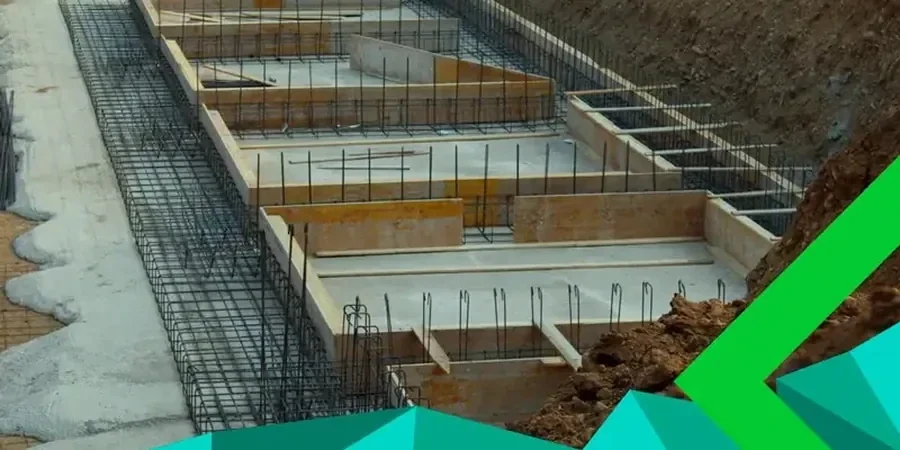
Shepparton's reactive clays demand a foundation design that accounts for 50-80 mm of seasonal movement. Guessing leads to cracks.
Method and coverage
Regional considerations
AS 2870 (Residential Slabs and Footings) is the governing standard in Australia, and it is especially relevant in Shepparton due to the highly reactive clay profiles. Ignoring the site classification—M, H1, H2, or E—leads to under-designed footings that crack within the first year. We have seen houses in Shepparton's newer estates where the slab was designed for class M but the actual ground was class H2. The result: interior wall cracks, sticking doors, and a six-figure repair bill. The risk is not theoretical. We follow the full AS 2870 procedure: site investigation, soil reactivity testing, and classification before we write a single design calculation. That is the only way to build on Shepparton's ground safely.
Standards that apply
AS 2870-2011 (Residential Slabs and Footings), AS 1726-2017 (Geotechnical Site Investigations), AS/NZS 1170.0-2002 (Structural Design Actions)
Other technical services
Residential Slab & Footing Design
Site classification per AS 2870, soil reactivity testing, and stiffened raft or waffle slab design for houses and townhouses. We account for tree root zones and irrigation effects.
Commercial Pad & Strip Footing Design
Bearing capacity analysis using SPT and plate load test data, settlement calculations, and reinforcement detailing for light industrial or retail structures up to 3 storeys.
Improvement Recommendations
When the native clay is too weak or reactive, we specify options like lime stabilisation, preloading, or deep soil mixing to make shallow foundations viable.
Typical parameters
Top questions
What is the typical cost of a shallow foundation design in Shepparton?
For a standard residential project, the geotechnical investigation and foundation design typically ranges between AU$3,270 and AU$4,430. This includes site classification, soil testing, and a written design report. Commercial projects vary by scale.
How deep do footings need to be in Shepparton's clay soils?
Following AS 2870, minimum footing depth depends on the site's reactivity classification and the distance to trees. In Shepparton's H2 clays, we often specify depths of 0.8 to 1.2 metres to get below the active zone where seasonal moisture changes occur.
Can I use a standard slab-on-grade in Shepparton?
A standard unreinforced slab is risky here. The expansive clays can lift the slab edges by 50 mm or more. For most sites, a stiffened raft or waffle raft with deeper edge beams is required to resist the heave and shrinkage forces.
What soil tests are required before foundation design?
Essential tests include Atterberg limits (plasticity index, linear shrinkage), moisture content, dry density, and consolidation (to measure swelling pressure). We also recommend a plate load test on site to confirm the design bearing capacity.