Geotechnical site investigation forms the foundation of safe and compliant construction across the Goulburn Valley region. In Shepparton, where varying soil profiles and a high water table present unique challenges, a thorough understanding of subsurface conditions is not merely a regulatory requirement but a critical risk-management tool. Our investigation category encompasses a suite of in-situ and field testing methodologies designed to characterise soil strength, stratigraphy, and behaviour under load. Whether you're planning a residential slab, a commercial warehouse, or critical civil infrastructure, these services deliver the data engineers need to design appropriate foundations and earthworks, mitigating the risk of unexpected settlement or structural distress.
The significance of these investigations in Shepparton is amplified by the region's complex Quaternary geology. The landscape is dominated by the ancient course of the Goulburn River and its associated floodplain, resulting in layered deposits of alluvial clays, silts, and sands. These cohesive soils, particularly the locally prevalent Shepparton Formation clays, are often reactive, undergoing significant volume changes with seasonal moisture fluctuations. This shrink-swell potential is a leading cause of cracking in lightly loaded structures. Furthermore, the presence of paleochannels filled with loose, saturated sands can introduce risks of instability during excavation. A superficial assessment is wholly inadequate; a targeted investigation plan is essential to map these variable conditions across a site.
All investigation work in Shepparton is governed by a robust framework of Australian Standards, ensuring consistency and reliability in data collection. The primary standard is AS 1726:2017 Geotechnical Site Investigations, which provides comprehensive guidelines for planning, execution, and reporting. This is complemented by specific test method standards, such as AS 1289 for soil testing methods. Adherence to these norms is mandatory for demonstrating due diligence and obtaining necessary construction approvals. Our reporting aligns strictly with these requirements, presenting factual data and interpretive analysis that local councils and certifiers accept without question. This rigorous approach provides stakeholders with the defensible documentation required to proceed with confidence.
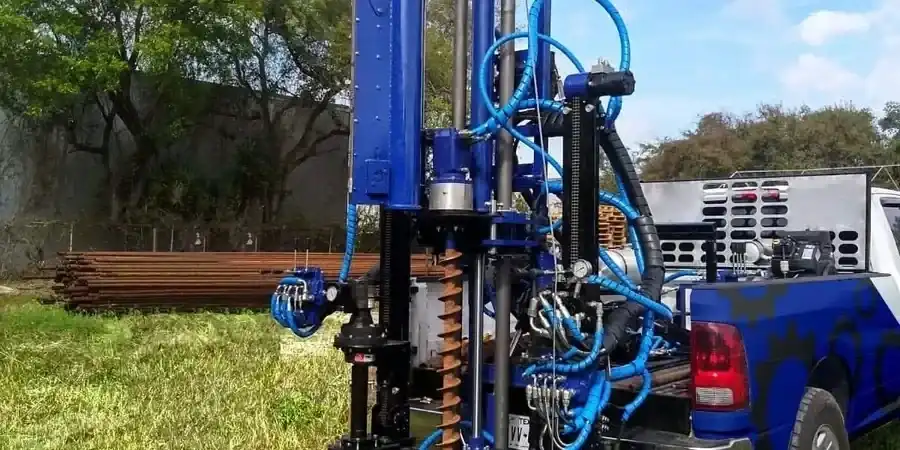
The scope of projects requiring these investigations is broad. For a residential development on a reactive clay site, a exploratory test pit allows for visual inspection and sampling of the near-surface profile, often sufficient for Class M or H1 site classification. For larger commercial or industrial projects where deeper strata control design, continuous profiling via a CPT (Cone Penetration Test) provides a high-resolution log of soil behaviour, particularly valuable for identifying soft clay layers and assessing liquefaction potential. When standard parameters for foundation design are needed, the SPT (Standard Penetration Test) remains the industry benchmark, delivering a disturbed sample and a direct measure of relative density. Each technique, from a simple pit to advanced penetrometer testing, plays a distinct role in building a complete geotechnical model, and the correct selection is critical for a cost-effective and conclusive investigation.
Top questions
What is the main purpose of a geotechnical site investigation in Shepparton?
The primary purpose is to characterise subsurface soil and groundwater conditions to inform safe and economical engineering design. In Shepparton, the investigation is crucial for identifying reactive clays and loose alluvial sands that can cause foundation movement or excavation instability, allowing engineers to mitigate these risks before construction begins.
How do I know which type of investigation method is right for my project?
The appropriate method depends on the geological context, the structure's load, and the project's risk profile. A lightweight house on a flat block might only require exploratory test pits, while a multi-storey structure or a site near a paleochannel will typically demand deeper profiling with CPT or SPT rigs to assess deep-seated stability and settlement parameters accurately.
Does the investigation need to comply with specific Australian Standards?
Yes, all investigations must be conducted in accordance with AS 1726:2017, which dictates the planning, drilling, sampling, and reporting protocols. Test-specific standards like AS 1289 for laboratory testing also apply. Compliance is essential for regulatory approval and forms the basis of any professional indemnity defence for the geotechnical report.
What are the risks of building without a proper geotechnical investigation in the Goulburn Valley?
Building without an investigation exposes a project to significant financial and safety risks, including excessive differential settlement, foundation cracking from reactive clay heave, and catastrophic bearing failure in loose, saturated soils. Rectifying such failures often costs many times more than the original investigation, leading to major project delays and protracted legal disputes.