In Shepparton, the seasonal flooding of the Goulburn River and the expansive clay profiles common in the Goulburn Valley demand a cautious approach to rigid pavement design. Many local engineers have seen standard concrete slab thicknesses fail after one wet winter because the subgrade CBR dropped below 2%. That is why we always start with a detailed subgrade investigation that includes in-situ moisture content profiles. Before committing to a design modulus, we cross-check with a plate load test to capture actual stiffness rather than relying on assumed values. That field data then feeds into our fatigue analysis for the pavement slab.
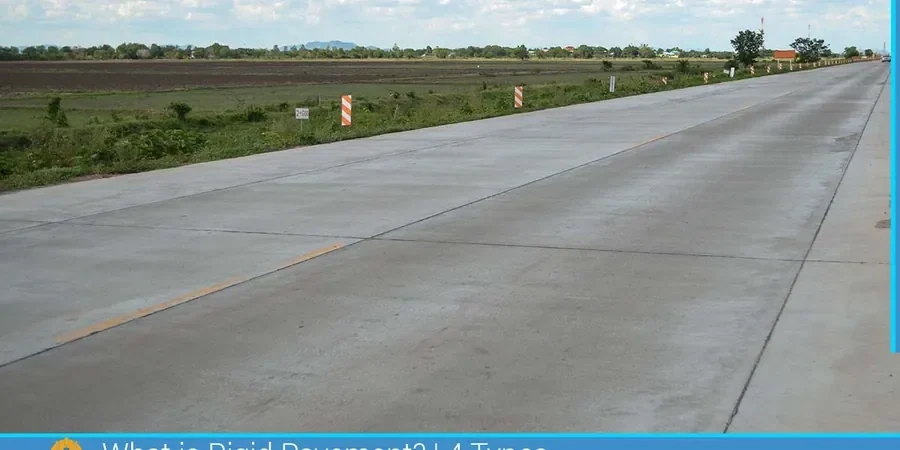
A subgrade CBR below 2% after wetting is not uncommon in Shepparton—designing rigid pavement without verifying that value is a structural risk.
Method and coverage
- Subgrade CBR testing at in-situ moisture content (AS 1289.6.1.1)
- Modulus of subgrade reaction (k-value) derived from CBR test correlations and plate load verification
- Joint spacing design based on slab temperature gradients for the local climate
- Dowel bar sizing per Austroads Part 6 – 2021 revision
Regional considerations
The biggest operational risk in Shepparton arises when the subgrade is tested during a dry spell and then loaded during a wet season. We use a CPT rig to profile soil strength continuously down to 6 m depth, and we measure in-situ moisture with a neutron probe when possible. If the water table is within 1 m of the surface, a rigid pavement without a subsurface drainage layer can suffer pumping and slab erosion within two years. That scenario has been documented in local council road projects near the Shepparton railway station.
Standards that apply
AS 1289.6.1.1 – CBR test method, Austroads Part 6: Pavement Design – 2021, AS 3600 – Concrete structures (for joints and reinforcement)
Other technical services
Subgrade investigation & CBR profiling
In-situ CBR tests at natural moisture content, plus laboratory soaked CBR to simulate worst-case conditions.
Plate load test & k-value determination
Field plate load tests to directly measure the modulus of subgrade reaction for the design of concrete slabs.
Thickness design & joint layout
Fatigue analysis using the PCA method with local climate data to optimise slab thickness and joint spacing.
Typical parameters
Top questions
What CBR value is typical for subgrade in Shepparton?
Natural subgrade CBR in Shepparton ranges from 2% to 8% depending on clay content and moisture. We always recommend soaked CBR testing because the region's irrigation season can raise the water table significantly.
How does the Goulburn River flood cycle affect rigid pavement design?
Flood events saturate the subgrade, reducing its modulus. We design for a 'reduced k-value' scenario using the lowest recorded CBR from wet-season testing to avoid slab failure after heavy rain.
What joint spacing is recommended for Shepparton concrete pavements?
Transverse joints are typically placed at 4.5 m intervals for residential streets and 5.5 m for arterial roads. Dowel bars are specified at mid-depth to transfer load without cracking the slab.
How much does rigid pavement design cost in Shepparton?
The geotechnical investigation and design package for rigid pavement in Shepparton typically ranges from AU$2.490 to AU$10.450, depending on the number of test pits and CBR tests required.